General Information
With the Davis® Method, you learn to make the most of your unique way of thinking and learning. You discover how to use your natural talents and strengths to overcome challenges with reading, maths, and/or concentration. Your brain processes information differently from someone who does not experience dyslexia, dyscalculia, or AD(H)D. This different way of thinking comes with many advantages, such as creativity and the ability to quickly grasp the bigger picture, but it can also lead to difficulties with learning and concentration.
At work and at school, the unique talents and strengths of neurodivergent individuals often go unrecognised. There is also frequently a lack of understanding of what you, as a neurodivergent person, need to function effectively, thrive, and perform at your best.
The Davis® Method provides you with techniques to overcome the confusion you may experience as a visual thinker in a learning environment that is primarily focused on words and verbal thinking. You also learn to recognise when you are becoming confused. This isn't always easy, especially when you're right in the middle of it. But once you understand how it works, it can actually be quite simple. This helps bring calm and clarity to your mind and encourages both hemispheres of your brain to work together more effectively, which is an essential part of the approach. You'll also learn to use your natural strengths as a visual thinker to support your reading, writing, spelling, maths, and much more.

The Davis® Method is suitable for both adults and children who experience difficulties with reading, learning, maths, or attention and want to overcome these challenges.
There is now scientific evidence suggesting that alternative teaching approaches can be beneficial. These methods may be effective for all children. Current reading instruction, which primarily focuses on phonics (connecting letters to sounds), is well suited to approximately 80% of students. However, for the remaining 20%, this approach may be considerably less effective.
These students can particularly benefit from the way I support reading and maths education, especially children with dyslexia and/or dyscalculia.
Background
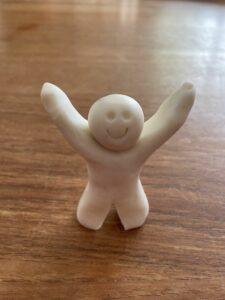
The Davis® Method was developed by Ron Davis, who himself has severe dyslexia. Through experimentation, he discovered that he was unable to sculpt and write immediately after one another. When sculpting, he could clearly visualise the finished sculpture in his mind, as though he could mentally walk around it and view it from every angle.
Ron suffered so much from his dyslexia that he only learned to read at the age of 38. He then discovered how he could switch off his ability to look at something in his mind from multiple sides (with his ‘Davis instruments’). This was the step towards learning to read. Putting aside his ability to look at something from all sides is what we call ‘orienting’. This ‘orienting’ helps you to focus, to concentrate. This became the starting point of the counselling. When you are oriented, you see what is there, hear what is there, and are present in the here and now.
Practical Information
The counselling itself
Every programme begins by determining what you or your child wants to learn. What difficulties are you experiencing and what do you want to address? This determines how long we will work together. Dyslexia counselling takes an average of 30 hours, while dyscalculia and/or AD(H)D counselling takes a little longer. We always make use of your creativity and abilities. You determine the pace and the content, and I support this process with my knowledge and experience. This way, you always receive a tailor-made programme, and every counselling process is unique.
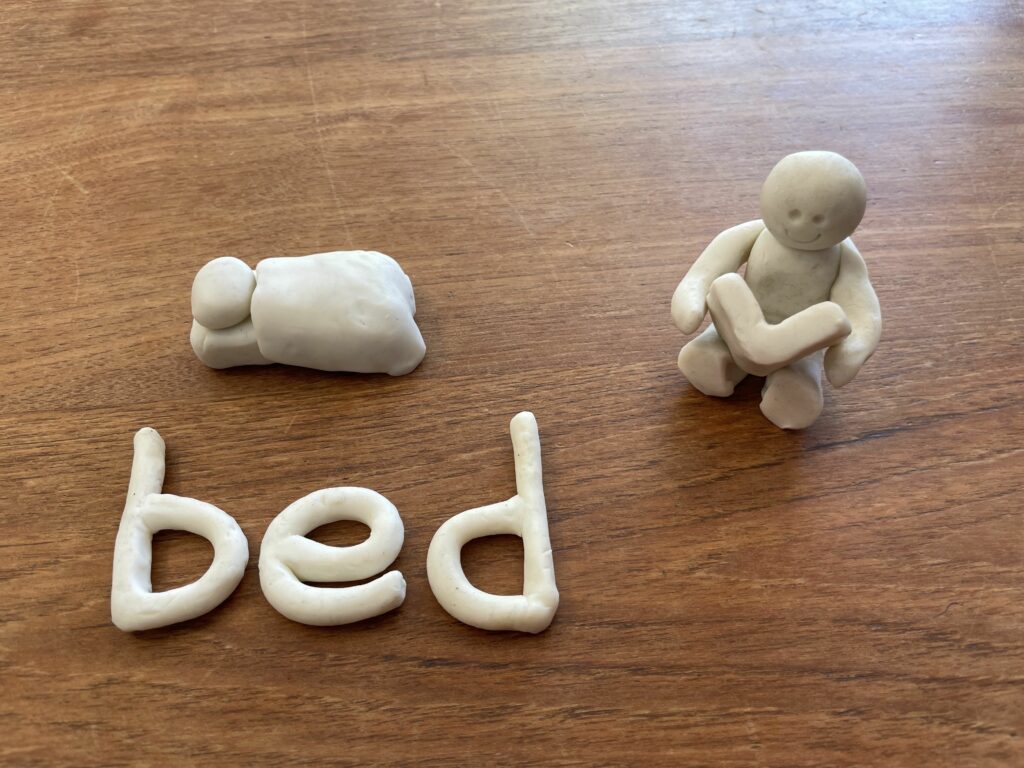
During dyslexia counselling, we then begin by identifying and resolving the confusion associated with the letters, both in the uppercase and lowercase alphabets. After that, we can take the step towards creating images for words for which there is not yet an image and which you cannot ‘see’ in the text. You create your own images. And everything you create yourself belongs to you and you will continue to remember it. You can apply this principle to any word for which you need it, both in Dutch and in a foreign language. We conclude the counselling as soon as we both feel that you can continue without my help. You take responsibility yourself and take your life back into your own hands.
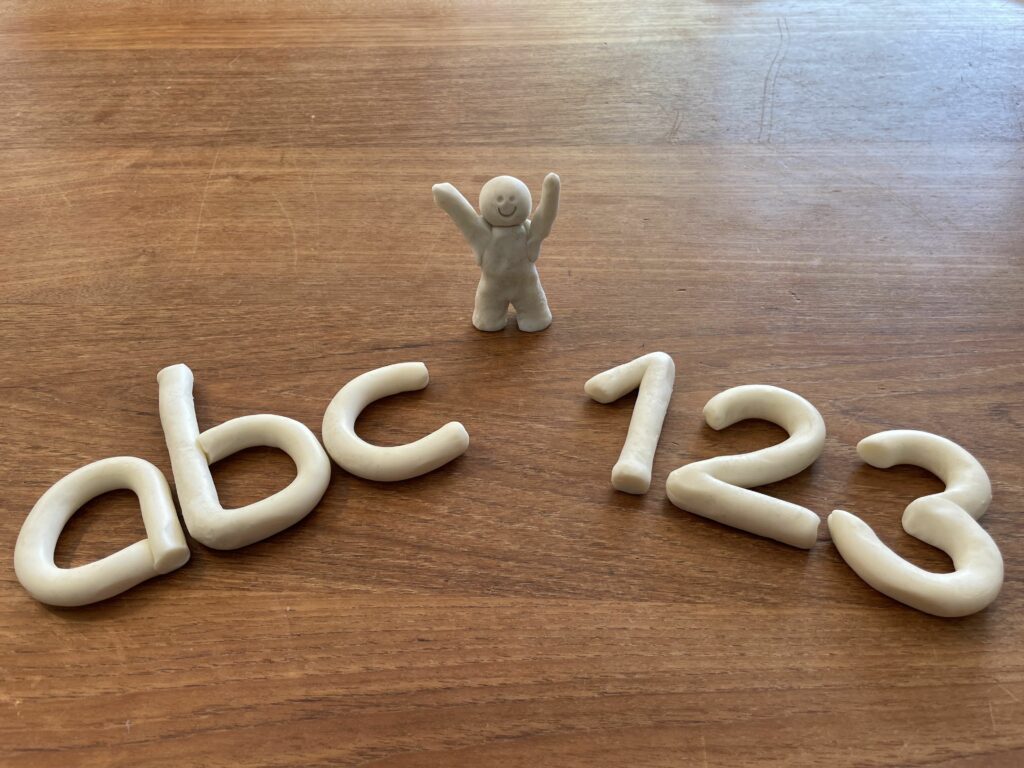
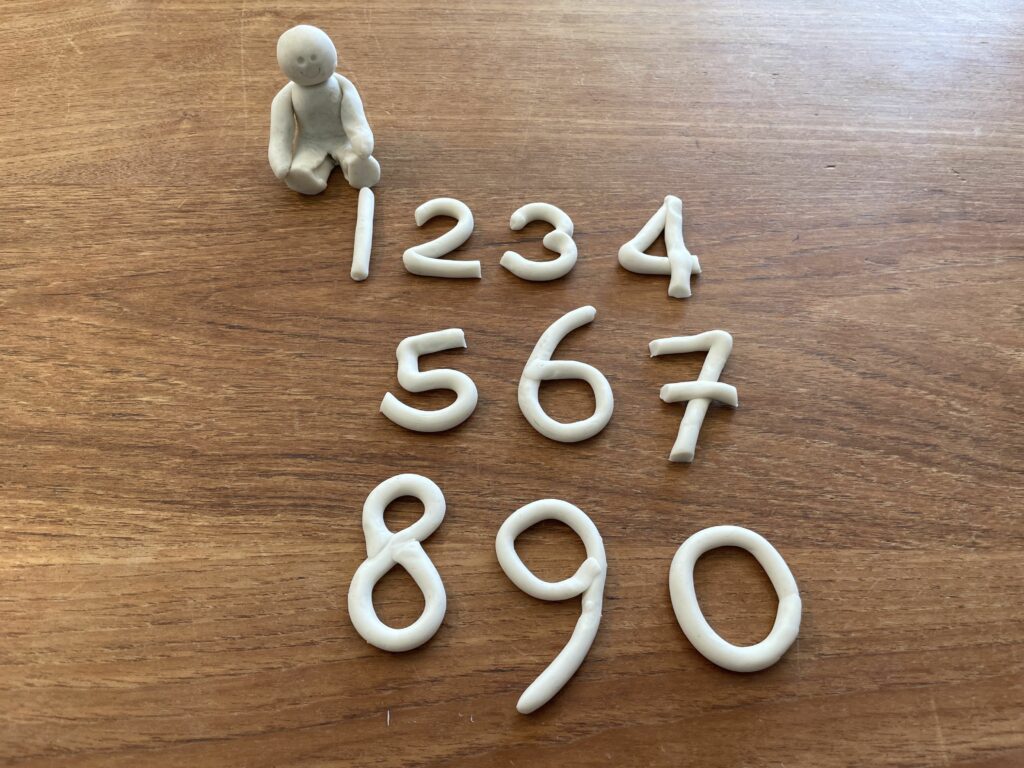
Dyscalculia counselling also makes use of the three Davis instruments and the lowercase alphabet. Just as someone with dyslexia experiences confusion with letters, someone with dyscalculia may experience confusion with mathematical symbols. We address this confusion. The confusion causes someone to become easily distracted and therefore miss information. This already happens at a young age, which means that certain life lessons (or concepts) may be missed, such as, for example, sequence. What is sequence and why is it important? In mathematics, too, the order of operations determines the outcome of a calculation. During counselling, we introduce these concepts and thereby lay the foundation for arithmetic. After that, we can start working on specific arithmetic exercises. These exercises help, among other things, with developing a sense of the value and meaning of different numbers, or with learning to tell the time and estimate time.
Counselling aimed at helping with AD(H)D has the same foundation as dyscalculia counselling: the Davis instruments and the concepts. Instead of arithmetic exercises, we now connect the concepts to questions from your life, things that you or your child struggle with because of AD(H)D. This gives you more control over your life, and you feel much less as though life is happening to you. The chosen solutions are solutions that come from you. You will make different choices in your behaviour, which will also lead to different results.
You take control of your life back into your own hands!